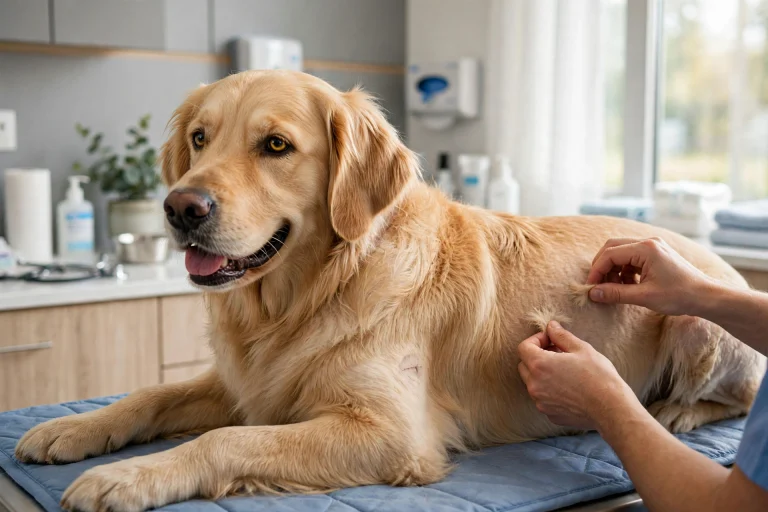
Dog Skin Tags: Causes, When to Worry, and Safe Removal
Finding a small, soft, dangling bump on your dog during a belly rub or grooming session can be alarming — but in the vast majority of cases, it's a skin tag: a harmless, benign growth that many dogs develop and simply live with for life. The important part isn't necessarily removing it, but knowing which signs mean it's worth a vet visit rather than something to just watch.
This article is for general information only and isn't a substitute for veterinary care. Any new lump should be checked by your vet at least once to confirm what it actually is — skin tags are common, but they're not the only thing a new bump could turn out to be.
What Skin Tags Actually Are
Skin tags (technically called fibrovascular papillomas or acrochordons) are small, benign growths made of collagen and blood vessels, most often found on the neck, chest, armpits, eyelids, or groin area. They typically feel soft, sometimes attached by a thin stalk, and tend to become more wispy or thin as they mature — though they can still grow in size over time.

Why Dogs Get Skin Tags
- Age — More common in middle-aged and senior dogs
- Genetics/breed predisposition — Boxers, Cocker Spaniels, Poodles, Miniature Schnauzers, Bulldogs, Beagles, and various hound breeds are more prone to developing them
- Friction or irritation — Repeated rubbing from a collar, harness, or bedding against the same spot on the skin
- Hormonal changes — Sometimes associated with puberty or pregnancy
- Metabolic factors — Some research links skin tag development in general to factors like elevated triglycerides, higher body weight, and insulin resistance
Because much of this is tied to genetics and normal aging, there's no guaranteed way to prevent skin tags entirely — but keeping your dog's skin clean, using well-fitted collars/harnesses, and providing supportive bedding can help reduce friction-related irritation that may contribute to them.
When It's Just a Skin Tag — No Action Needed
Most skin tags are harmless passengers that never need to be removed. If your vet has confirmed a growth is a skin tag and it isn't bothering your dog, it's generally fine to simply monitor it during regular skin checks (grooming sessions are a good time to do this) rather than pursuing removal.
Signs That Warrant a Vet Visit
- Rapid growth in size over a short period
- Bleeding or discharge
- Ulceration or an open sore developing on or around it
- Color changes
- Becomes painful when touched
- Location causes ongoing problems — near the eye where it affects vision, or somewhere it repeatedly catches on a collar, harness, or bedding
- Any new lump you're simply not sure about — a vet check is inexpensive peace of mind, and it's the only reliable way to distinguish a benign skin tag from something that needs closer attention
- Other skin changes, like thickened patches known as hyperkeratosis, are also worth mentioning to your vet during the same visit.
Why Home Removal Isn't Worth the Risk
It might be tempting to search for ways to remove a skin tag yourself, but veterinary sources are consistent on this: don't attempt to cut, tie off, or otherwise remove a skin tag at home. A few reasons this matters:
- Skin tags often have small blood vessels inside them, which can lead to significant bleeding if cut or torn
- Risk of infection from an improperly managed wound
- Incomplete removal can allow regrowth, meaning you go through the discomfort for nothing
- Most importantly: you can't be 100% certain it's actually a benign skin tag without a vet's evaluation. Removing it yourself at home delays proper diagnosis if it turns out to be something else that needs different treatment.
- Home remedies like tea tree oil are genuinely risky — tea tree oil is toxic to dogs if licked or absorbed in meaningful amounts, and applying unproven substances directly to a growth isn't a safe substitute for professional care

How Vets Remove Skin Tags (When Removal Is Needed)
- Surgical excision — cutting the tag away, typically under local or general anesthesia depending on size and location
- Cryotherapy — freezing the tag off
- Cauterization — using heat to remove it and seal the area, reducing bleeding risk
These procedures are quick, safe, and low-risk when performed by a veterinary professional — a meaningful difference from the risks of attempting removal at home. Vets sometimes also remove a bothersome skin tag opportunistically if your dog is already under anesthesia for another procedure, like a dental cleaning, which can save you an additional sedation event down the line.
Monitoring at Home
- Check your dog's skin monthly during grooming or petting sessions for new bumps or changes to existing ones
- Take a photo of any skin tag when first found, so you have a reference point to compare against later if you're ever unsure whether it's grown or changed
- Contact your vet or send a photo if you notice any of the warning signs listed above
Frequently Asked Questions
Are skin tags the same as warts? No, though they can look similar to an untrained eye. Warts are typically caused by a papillomavirus and can sometimes be contagious between dogs, while skin tags are not viral or contagious. A vet exam is the reliable way to tell them apart.
Can I just leave a skin tag alone forever if it's not bothering my dog? Yes, in most cases. If your vet has confirmed it's a benign skin tag and it isn't in a problematic location or causing discomfort, ongoing removal usually isn't medically necessary — just keep an eye on it during routine skin checks.
Is it normal for my dog to develop several skin tags as they age? Yes, this is common, especially in predisposed breeds and older dogs. Multiple tags aren't inherently concerning on their own, but each new one is still worth a quick look to confirm nothing about it stands out from a typical skin tag.
If your dog's skin is also irritated or inflamed in other spots, it's worth checking whether it could be something like hot spots, which needs separate care.