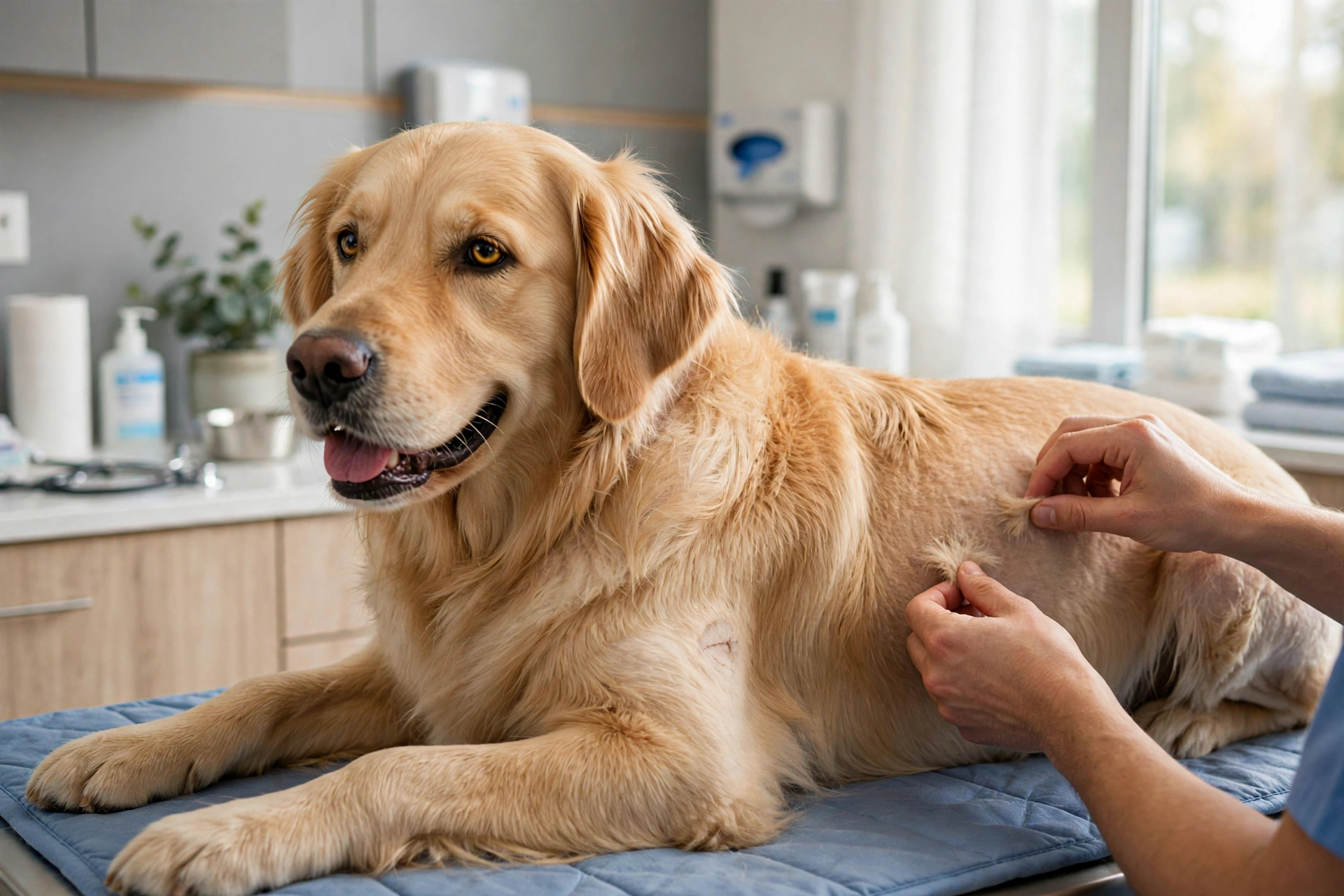
Dog Hot Spot Healing Stages: Day-by-Day Timeline
Dog Hot Spot Healing Stages: Day-by-Day Timeline
Short answer: with proper treatment, most dog hot spots heal in 1–2 weeks, and hair starts growing back within 2–3 weeks. Healing follows a predictable pattern: a raw, oozing stage (days 1–3), a drying stage (days 3–5), a scabbing stage (days 5–10), and finally hair regrowth (days 10–21+). If you don’t see clear improvement within about 3 days of starting treatment, or the spot keeps spreading, see your vet.
Watching a hot spot appear can feel alarming — nothing in the morning, a raw red patch by evening. The good news: hot spots are straightforward to resolve once you break the itch-lick cycle. Here’s what healing looks like, day by day.
What Are Hot Spots, Briefly?
A hot spot — acute moist dermatitis or pyotraumatic dermatitis — is a painful, inflamed skin lesion caused by your dog’s own licking, chewing, or scratching. It starts with an itch (often flea allergies or trapped moisture after swimming); scratching breaks the skin, bacteria multiply in the warm wound, and the resulting itch drives more licking. That self-feeding loop is why a hot spot can grow from a small red mark to a coin-sized sore in hours.
They most often show up at the base of the tail, the back of the legs, the groin, and around the neck. For a deeper dive into causes, see our guide on hot spots on dogs.
Stage 1: Active Infection (Days 1–3)
This is when most owners discover the problem: a moist, red, raw lesion, often oozing fluid, with matted fur around it and a possible odor. The area is painful — your dog may flinch or snap if touched — and the spot can still be expanding if licking continues.
What’s happening: bacteria are multiplying in the damaged skin, and inflammation is at its peak. Your goal right now is to stop the cycle: prevent licking, keep the area clean, and start treatment.
What to do:
- Put an Elizabethan collar (cone) on your dog immediately — this single step matters more than any cream or spray.
- Have your vet clip the hair around the sore so air can reach it (don’t try this at home if the area is very painful — let the vet handle it).
- Gently clean with plain saline or a pet-safe antiseptic your vet recommends.
What NOT to do: don’t use hydrogen peroxide or rubbing alcohol (both damage healing tissue and sting badly), don’t apply tea tree oil (toxic to dogs), and don’t cover the spot with a bandage or sock — hot spots need air to dry out.
Stage 2: Early Drying (Days 3–5)
Around day 3, a properly treated hot spot starts to “go quiet.” The oozing decreases noticeably, the angry redness fades toward a calmer pink, and the surface begins to dry. You may see healthy pink granulation tissue — new healing tissue — appearing at the edges of the sore. Most importantly, your dog should be bothering the area less.
What’s happening: the bacterial load is dropping and inflammation is resolving. The wound is transitioning from an open, weeping lesion to a drying one.
What to do:
- Keep the cone on — dogs often relapse right here because the spot itches differently as it dries, which tempts them to chew.
- Continue any vet-prescribed topical or oral medication for the full course, even if it looks better.
- Keep the area dry. Skip baths and swimming until your vet says otherwise.
Red flag: no improvement by day 3–4 — still spreading or oozing — means back to the vet. The infection may need different medication, or the underlying trigger hasn’t been addressed.
Stage 3: Crusting and New Skin (Days 5–10)
The lesion forms a dry crust or scab, with new skin growing inward from the wound’s edges beneath it. The area looks darker and drier, and your dog should largely ignore it. Progress feels slow day to day, but the scab is doing important work.
What’s happening: re-epithelialization — fresh skin cells migrating across the wound bed beneath the protective crust.
What to do:
- Leave the scab alone. Don’t pick it off; it will fall away on its own when the skin underneath is ready.
- You can usually remove the cone at this point only if your dog truly leaves the area alone — when in doubt, keep it on a few more days.
- This is a good time to ask your vet about the underlying cause if it hasn’t been identified yet (allergy testing, flea prevention, ear check).
Stage 4: Hair Regrowth (Days 10–21+)
The scab falls off, revealing new skin that may look pink or slightly darker than the surrounding area — that’s normal. Fine hair stubble begins to emerge, gradually filling in over the next few weeks. Full coat recovery can take 3–8 weeks depending on your dog’s breed and coat type, but the medical problem is resolved.
What’s happening: hair follicles that survived the inflammation resume normal growth cycles.
What to do:
- Support coat recovery with good nutrition — vet-approved fish oil (omega-3s) can help.
- Resume normal grooming, but be gentle over the new skin for another week or two.
- Keep up flea prevention and allergy management — that’s how you stop the next hot spot.
How to Help a Hot Spot Heal Faster
Beyond the stage-by-stage care above, these principles speed things along:
- Break the lick cycle first. The cone is treatment step number one. Every lick restarts the clock.
- Keep it clean and dry. Moisture is the enemy — dry your dog thoroughly after any bath or swim.
- Finish all medication. Stopping antibiotics or anti-itch meds early because “it looks fine” is a classic cause of relapse. Ask your vet if you’re unsure.
- Treat the trigger, not just the sore. Flea allergy is the most common cause — year-round flea prevention and allergy management prevent repeat episodes.
- Skip home remedies on open sores. Coconut oil, apple cider vinegar and similar favorites can irritate raw tissue or trap moisture — ask your vet first.
Warning Signs: When to See the Vet Promptly
Most hot spots need a vet visit at least once — especially the first one, or any that keep coming back. Call your veterinarian promptly if:
- The spot is larger than a coin or spreading rapidly
- There’s thick yellow or green pus, or a foul odor
- The hot spot is near the eyes
- Your dog is lethargic, feverish, or off their food
- There’s no improvement after about 3 days of treatment
- Hot spots keep recurring — a sign of an undiagnosed underlying issue like allergies
Preventing Hot Spots From Coming Back
Healing the current sore is only half the battle. Long-term prevention is straightforward:
- Year-round flea and tick prevention for all pets in the household
- Dry thoroughly after swimming or bathing — moisture trapped against skin is a top trigger
- Regular grooming to prevent matting, which traps moisture and hides early irritation
- Manage allergies with your vet (food trials, seasonal allergy medication, or immunotherapy)
- Address boredom and stress with walks, play, and enrichment — anxious dogs lick more
- Manage pain (e.g., arthritis) that causes a dog to lick one spot obsessively
Frequently Asked Questions
How long does it take for a dog hot spot to heal?
Most hot spots visibly improve within 3–7 days of treatment and fully heal in 1–2 weeks; hair regrowth takes another 2–3 weeks. Severe cases take longer.
What does a healing hot spot look like?
A healing hot spot gets progressively drier, less red, and less swollen. It transitions from wet and oozing to pink and dry, then forms a scab, and finally the scab falls off revealing new skin with hair stubble growing in.
Should I let my dog’s hot spot scab over?
Yes — scabbing is a positive sign that the skin underneath is repairing itself. Don’t pick the scab off; let it fall away naturally.
Can hot spots heal without a vet visit?
Mild, small, early spots sometimes resolve with a cone, gentle cleaning, and monitoring. But any large, deep, spreading, or very painful spot — or one not improving within 24–48 hours — needs a vet.
Why does my dog keep getting hot spots in the same spot?
Recurring hot spots usually mean the underlying trigger was never addressed — most commonly flea allergy, environmental or food allergies, or an ear infection (for cheek-area spots). Ask your vet to investigate the root cause.
This article is for general information only and is not a substitute for professional veterinary advice. If your dog has a skin lesion that concerns you, contact your veterinarian.