
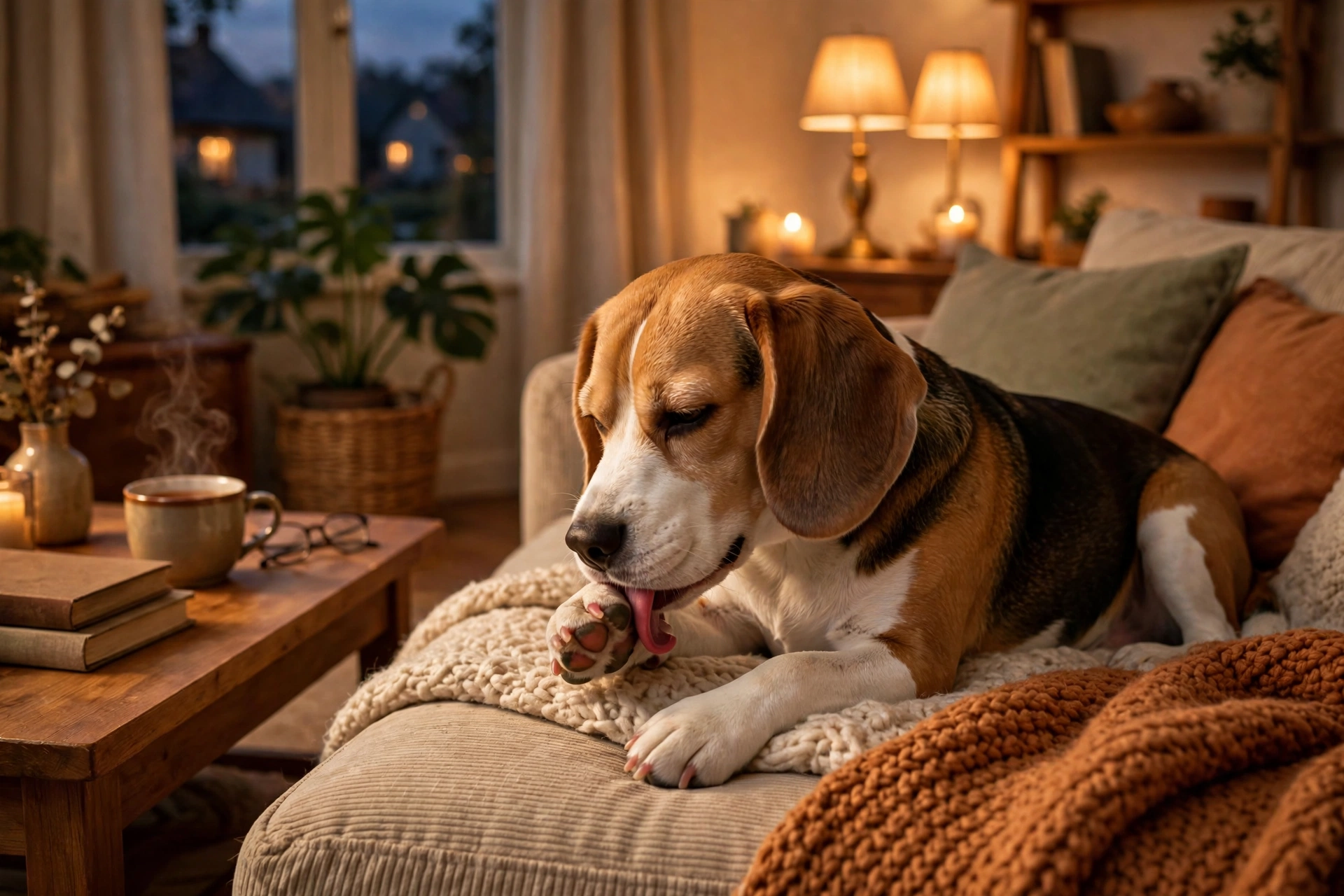
Why Is My Dog Licking His Paws at Night? 7 Causes
Why Is My Dog Licking His Paws at Night? 7 Causes
Short answer: a little paw licking before bed is usually normal grooming. But nightly, intense, or one-paw-focused licking often signals something else: allergies, dry skin, anxiety, boredom, pain, infection, or a leftover habit. The trick is reading the pattern — how much, how often, and what the paws look like.
If you’ve ever been kept awake by that rhythmic licking sound coming from the dog bed, you’re not alone. Here’s what’s behind it, when it’s harmless, and when it’s time to call your vet.
1. Allergies — The Most Common Culprit
Allergies top the list for nighttime paw licking. Dogs can react to pollen, grass, dust mites, mold, or ingredients in their food — and the paws often show it first, since they pick up allergens on walks and the skin between the toes is thin.
Signs it’s allergies:
- Paws look pink or red, especially between the toes
- Brownish staining on light-colored fur from saliva
- Itchy ears or face along with the paws
- Licking gets worse after walks or during certain seasons (spring and fall are classic)
Why worse at night: daytime distractions fade, and allergens from the evening walk are sitting right on his paws.
2. Dry, Cracked, or Irritated Skin
Dog paw pads can dry out and crack from cold weather, indoor heating, hot pavement, rough concrete, or winter de-icing salts. A dog with dry pads will often lick them in an attempt to “moisturize” — which backfires, since saliva strips natural oils and constant wetness causes more irritation.
Signs it’s dry skin:
- Paw pads feel rough, look flaky, or have small cracks
- Worse in winter or after walks on salted sidewalks or hot pavement
- Licking is spread across multiple paws rather than focused on one spot
A vet-approved paw balm can help protect and soften pads — but ask your vet which product is safe before applying anything, since your dog will lick whatever you put on.
3. Anxiety and Stress
Paw licking is a classic self-soothing behavior — it releases calming endorphins, like a person biting their nails. When the house goes quiet at night, dogs with separation stress, recent routine changes, or a nervous temperament feel it most.
Signs it’s anxiety:
- Licking happens mainly when settling down, or when the family is relaxing in the evening
- Comes with other stress signals: pacing, whining, restlessness, following you from room to room
- Started after a change — a move, a new schedule, a new pet, or a family member leaving
A predictable, calming bedtime routine helps enormously: a short evening walk, a few minutes of gentle play or training, then a cozy, quiet sleeping spot.
4. Boredom or Not Enough Stimulation
A dog who didn’t get enough exercise or mental stimulation has leftover energy at night — and licking fills the gap. Working and sporting breeds are especially prone, but any under-exercised dog can develop the habit.
Signs it’s boredom:
- Licking is casual and spread across paws, not frantic or focused
- Comes with other “I’m bored” behaviors: chewing furniture, digging, pestering you for attention
- Improves noticeably on days with long walks or active play
The fix: more daytime exercise and enrichment. Puzzle feeders, sniff walks, and short training sessions tire a dog’s brain as well as his body.
5. Pain or an Injury
When a dog suddenly starts licking one specific paw, think pain first — dogs instinctively lick sore spots. The cause could be a cut, thorn, splinter, torn nail, bee sting, a burr between the toes, or early arthritis.
Signs it’s pain or injury:
- Licking is focused on ONE paw (this is the biggest clue)
- Limping, favoring the paw, or flinching when you touch it
- Visible swelling, a cut, redness, or something stuck in the paw
Check the paw yourself: spread the toes, look between them, and inspect the pads and nails. But if there’s limping, swelling, bleeding, or no obvious cause, let your vet take a look rather than guessing.
6. Infections or Parasites
Yeast and bacterial skin infections thrive in the warm, moist space between toes — and nighttime licking keeps it moist, creating a vicious cycle. Fleas, mites, or ringworm can also drive dogs to chew their feet.
Signs it’s infection or parasites:
- A yeasty, corn-chip-like, or sour smell coming from the paws
- Redness, swelling, discharge, or sores between the toes
- Dark brown discoloration of the fur around the paws
- Licking that keeps getting more intense instead of staying the same
This one needs a vet visit for proper diagnosis — the wrong cream can make things worse. Never use human antifungal or steroid creams without veterinary guidance; many are unsafe if licked.
7. A Habit That Outlived Its Cause
Sometimes the original problem — an allergy flare-up, a healed cut, a stressful week — is long gone, but the licking continues out of habit. It’s self-reinforcing, and in some dogs escalates into compulsive behavior. Constant licking of one spot can even create a raw, thickened sore called a lick granuloma, which itches and invites more licking.
Signs it’s become habit:
- The licking persists even though the paws look healthy and the original trigger is resolved
- Your dog licks the same spot in the same way, almost ritualistically
- He has trouble stopping even when distracted briefly
Break the cycle with redirection — more exercise, enrichment, and chew toys — and limit licking opportunities (an e-collar or bitter spray, on vet advice, short-term). If it’s truly compulsive, talk to your vet or a certified behaviorist.
When It’s Normal vs. When to Call the Vet
Probably normal: brief, relaxed licking for a few minutes before falling asleep. Paws look healthy — no redness, no smell, no swelling. Your dog stops easily when distracted and sleeps soundly afterward.
Call your vet if you notice:
- Licking focused on one paw, or sudden limping
- Red, swollen, smelly, or sore-looking paws
- Hair loss or raw spots from licking
- Brown staining that’s spreading
- Licking that doesn’t stop when you distract him
- Any sudden change in a dog who never did this before
What You Can Do at Home Tonight
You don’t have to wait for a vet appointment to start helping:
- Wipe paws after walks. A damp cloth or unscented pet wipe removes pollen, dust, and road chemicals before they cause itching.
- Check between the toes weekly. Look for redness, burrs, cuts, or swelling while it’s still minor.
- Burn off energy. An evening walk plus ten minutes of play or training before bed curbs boredom and anxiety licking.
- Keep a calming bedtime routine. Same order nightly — walk, wind-down, cozy bed — so your dog learns it’s sleep time, not worry time.
- Try a vet-approved paw balm for dry pads (ask your vet first — he’ll lick it off, so it must be safe).
- Redirect, don’t punish. Scolding worsens anxiety — offer a chew toy or stuffed Kong instead.
- Skip the DIY pharmacy. Never apply human creams or home remedies without asking your vet — many are toxic when licked.
Frequently Asked Questions
Is it normal for dogs to lick their paws before bed?
Yes — a few minutes of relaxed licking as part of settling down is normal grooming behavior for many dogs. It only becomes a concern when it’s frequent, intense, long-lasting, or focused on one paw.
Why does my dog only lick one paw?
One-paw licking most often points to something local: a cut, splinter, thorn, torn nail, insect sting, or joint pain. Check the paw carefully, and see your vet if there’s limping, swelling, or no obvious cause.
Why does my dog lick his paws more at night than during the day?
Daytime distractions fade, so he notices irritation more — and nighttime quiet amplifies anxiety, which licking soothes. Either way, there’s usually an underlying cause worth identifying.
How do I get my dog to stop licking his paws at night?
Address the likely cause: wipe paws after walks, add daytime exercise, keep a calming bedtime routine, and check for injury or infection. If licking is intense, one-sided, or comes with redness, odor, or sores, see your vet.
Can anxiety really cause paw licking?
Yes. Licking releases calming endorphins, so anxious dogs lick their paws like people bite their nails. If it clusters around bedtime or stressful events, ask your vet about calming strategies.
This article is for general information only and is not a substitute for professional veterinary advice. If your dog’s paw licking is persistent, severe, or comes with other symptoms, contact your veterinarian.


